Everything you need to know about the arithmetic mean and its useful variations: weighted, geometric, and harmonic means with formulas and worked examples.
What is the Mean?
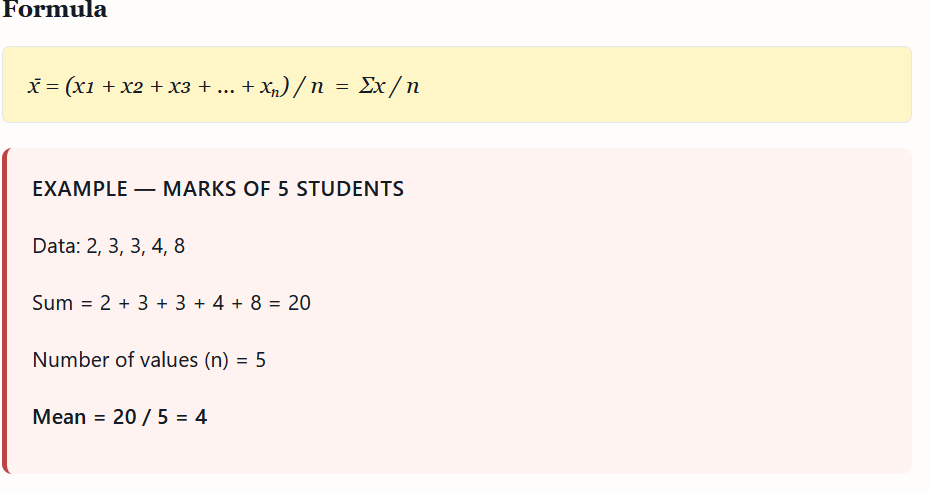
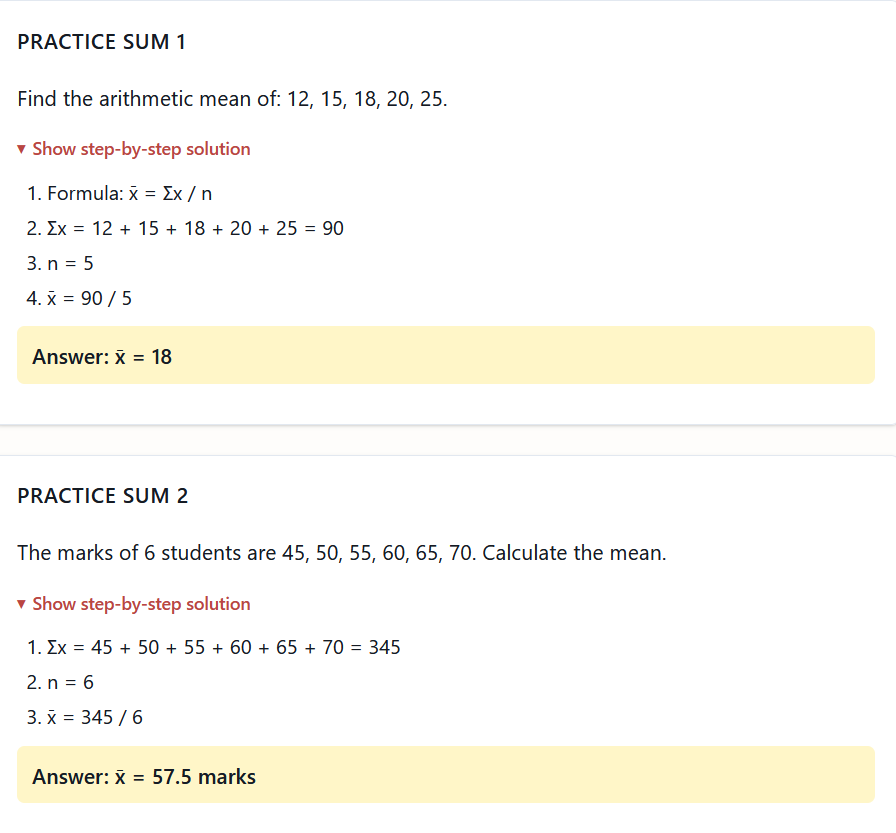
The mean is the most common measure of central tendency. In simple words, it is the “usual average” — a single number that represents the center of a group of values. You find it by adding up all the values and then dividing by how many values there are.
Whenever someone says “average marks”, “average income”, or “average temperature”, they almost always mean the arithmetic mean.
1) Arithmetic Mean
Properties of the Arithmetic Mean
- It uses every value in the dataset.
- The sum of deviations from the mean is always zero: Σ(x − x̄) = 0.
- It is easy to calculate and widely understood.
- However, it is heavily affected by extreme values (outliers).
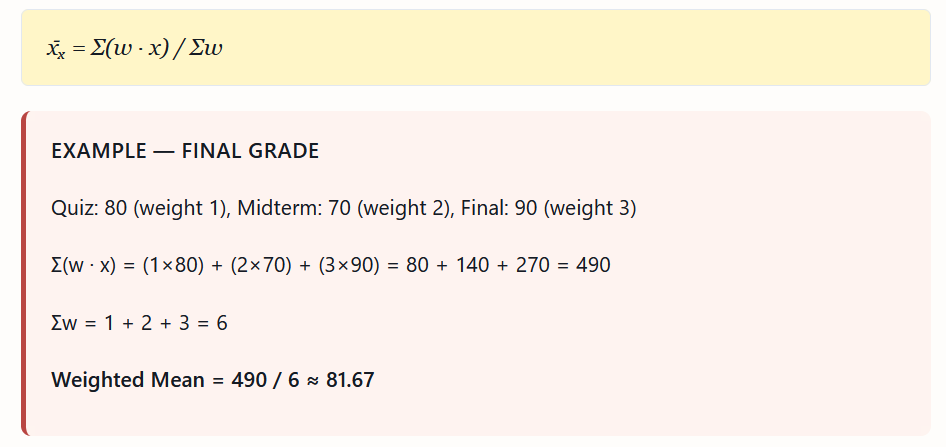
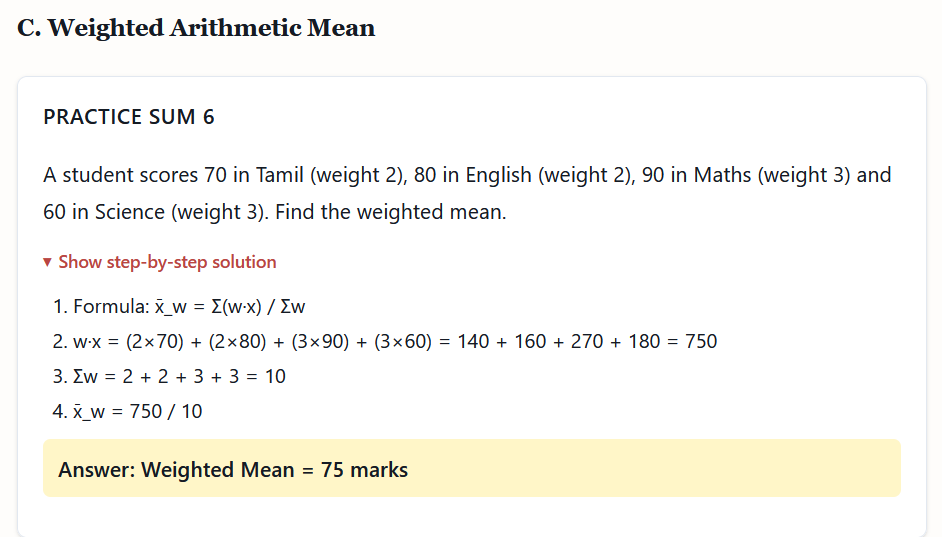
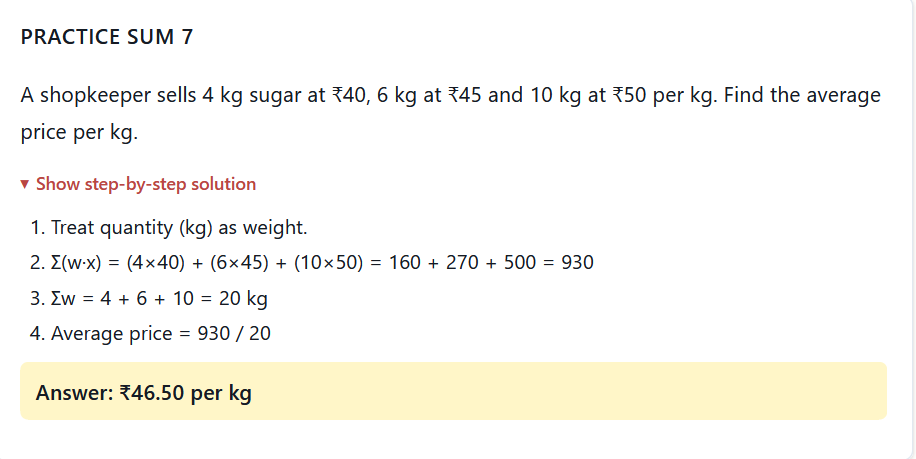
2) Weighted Arithmetic Mean
Sometimes, not all values are equally important. A weighted mean gives more importance to certain values by attaching a “weight” to each one — for example, when calculating a final grade where exams count more than quizzes.
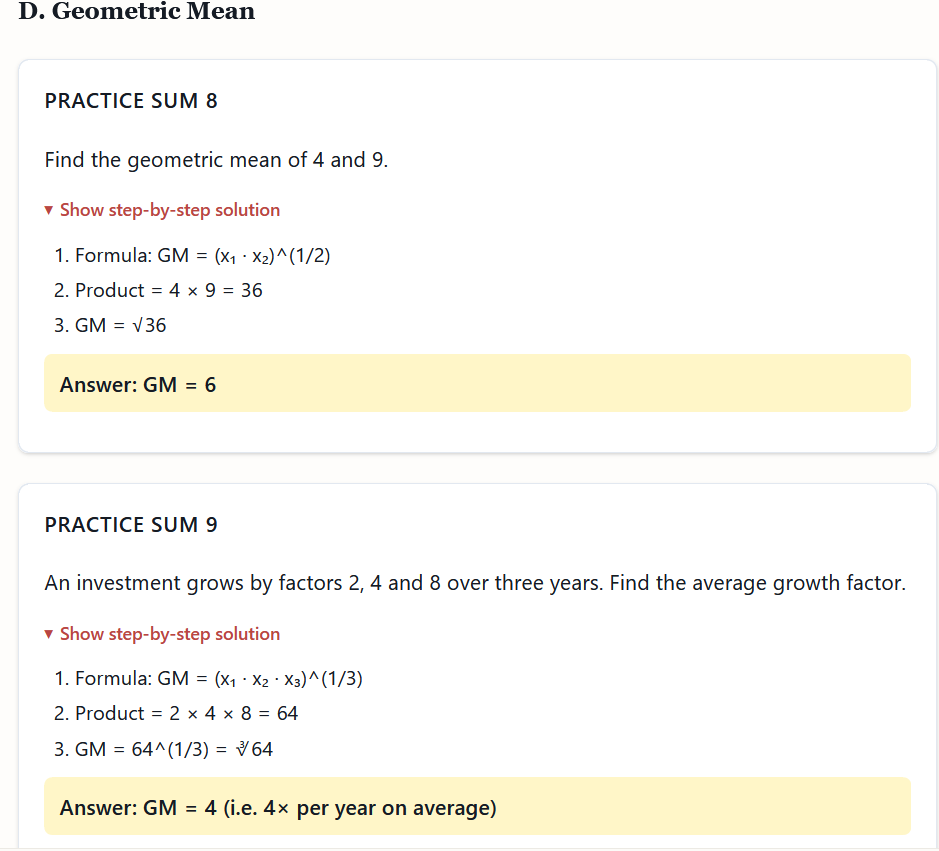
3) Geometric Mean
The geometric mean is used when values are multiplied together or when dealing with rates of growth, returns, or ratios like average investment return or population growth rate.
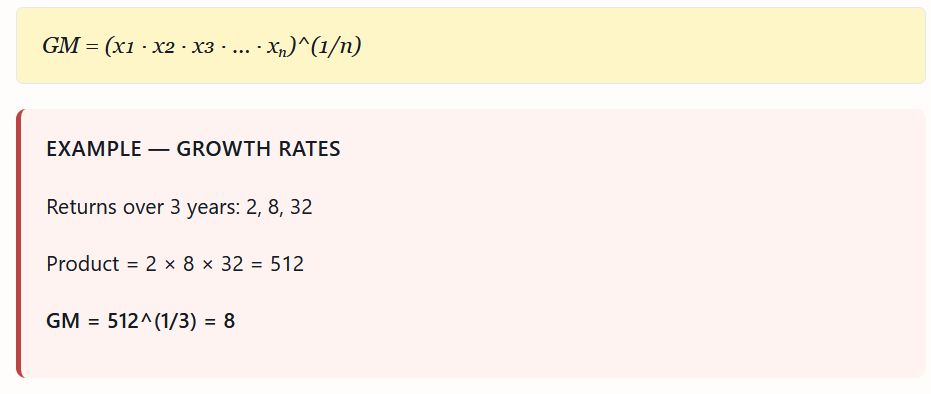
The geometric mean is always less than or equal to the arithmetic mean for the same positive data.
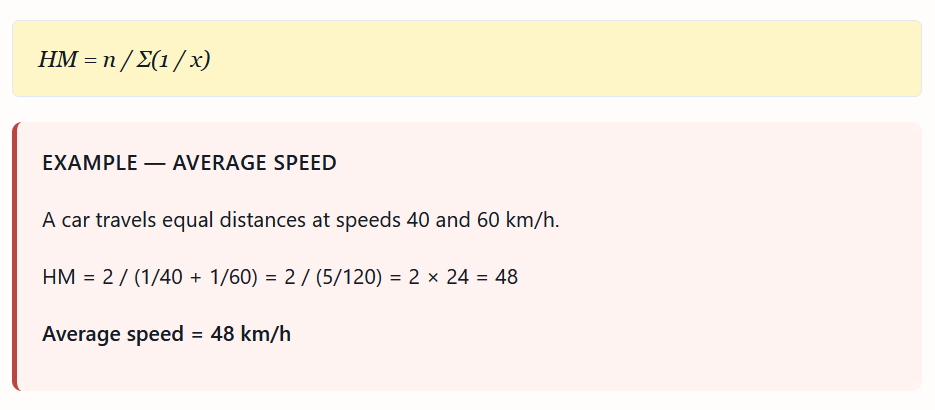
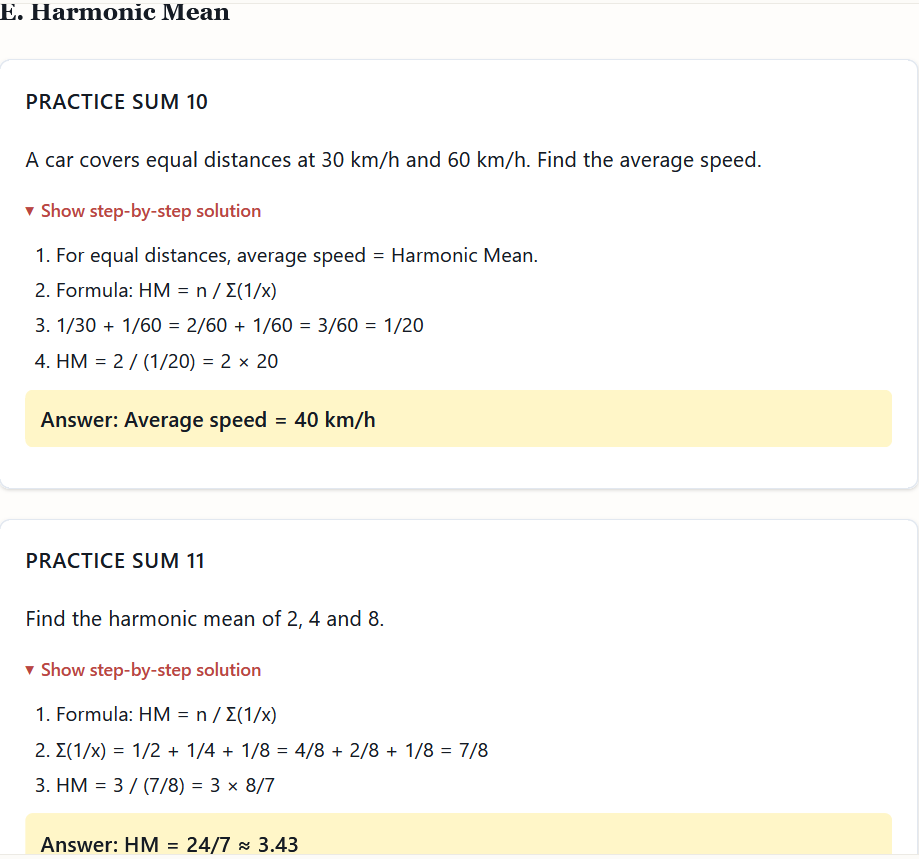
4) Harmonic Mean
The harmonic mean is most useful for averaging rates and ratios — for example, average speed when distances are equal, or average price-to-earnings ratios.
Quick Comparison
- Arithmetic Mean — best for general everyday averaging.
- Weighted Mean — when items differ in importance.
- Geometric Mean — for growth rates, ratios, and percentages.
- Harmonic Mean — for averaging rates like speed or price ratios.
Together, these means are powerful tools — choose the one that matches the kind of data you are analysing, and your “average” will tell a much more honest story.
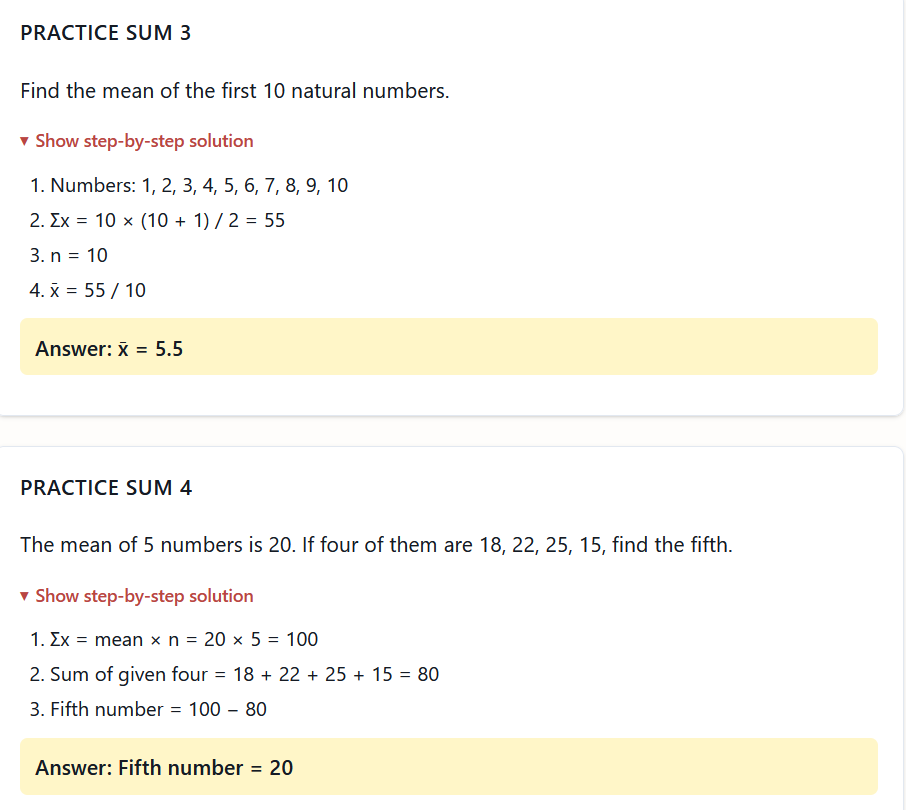
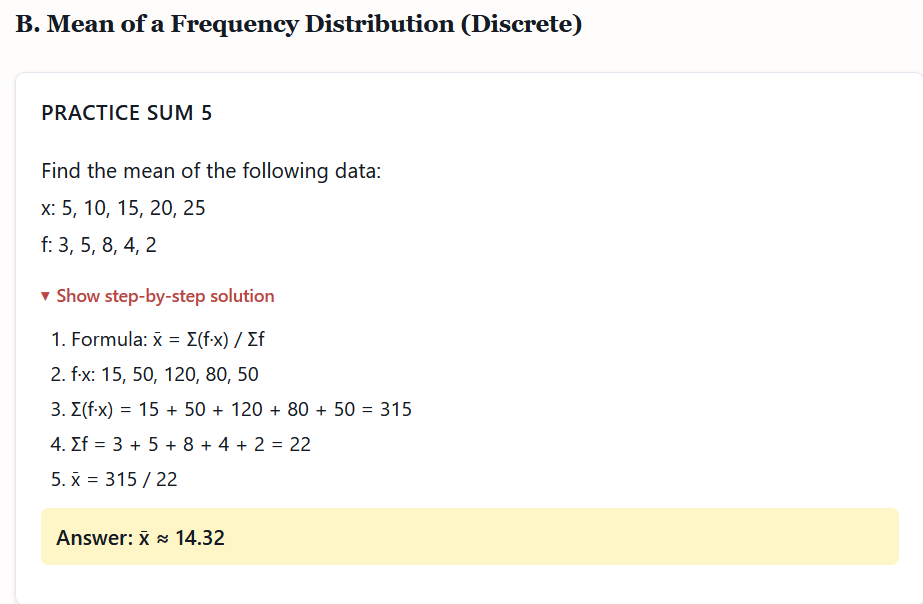
Practice sums

Tips to Score Full Marks
- Always write the formula first, then substitute values.
- Show each addition / multiplication step examiners give step marks.
- Don’t forget units (marks, ₹, km/h, kg).
- Check: arithmetic mean lies between the smallest and largest values.
- For equal distances → use HM; for growth rates → use GM.
- Round only at the final step, usually to 2 decimal places.

Swathika B is an MBA graduate in Finance & Business Analytics , the founder of The Commerce Lab. With a strong academic foundation in B.Com BFSI and hands-on experience in financial analysis, data analytics, and business studies, she created this platform to make Commerce and Accountancy simple, practical, and exam-ready for students across India.