What is the Median?
The median is the middle value of a data set when the values are arranged in ascending (or descending) order. It divides the data into two equal halves — 50% of the values lie below it and 50% lie above it.
Unlike the mean, the median is not affected by extreme values (outliers). That is why we often use the median income of a village or the median marks of a class — it gives a more honest middle picture.
1) Median of Raw (Ungrouped) Data
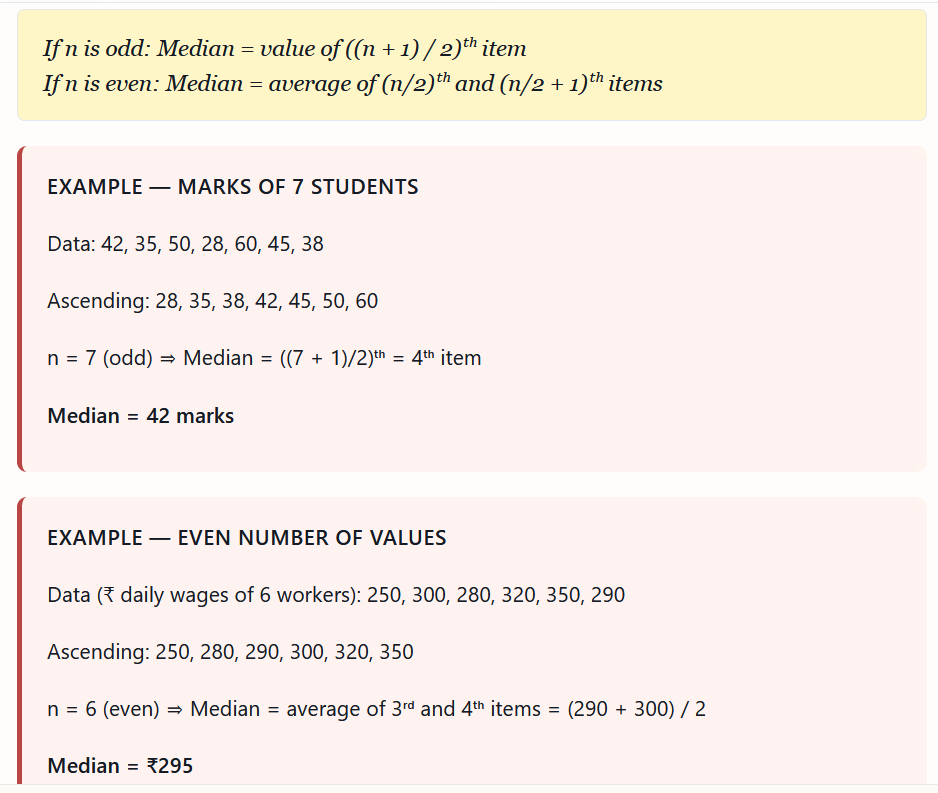
Step 1 — Arrange in ascending order
Step 2 — Apply the formula based on n
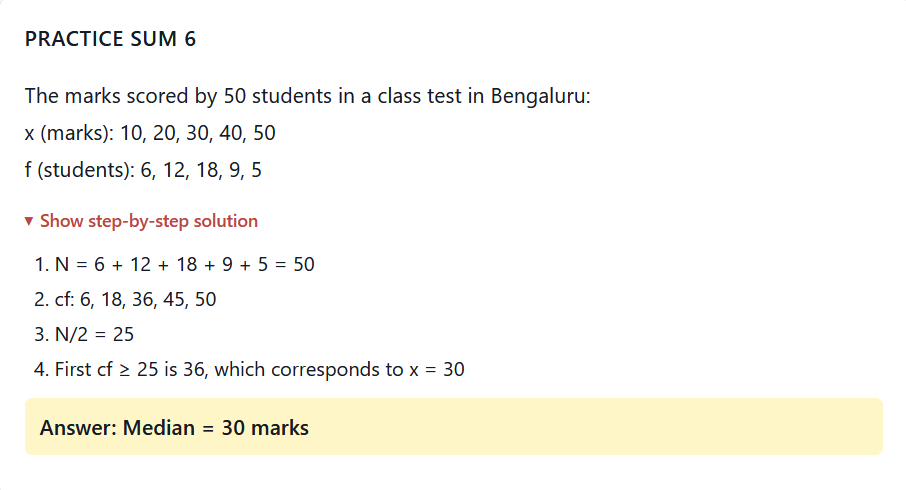
2) Median of a Discrete Frequency Distribution
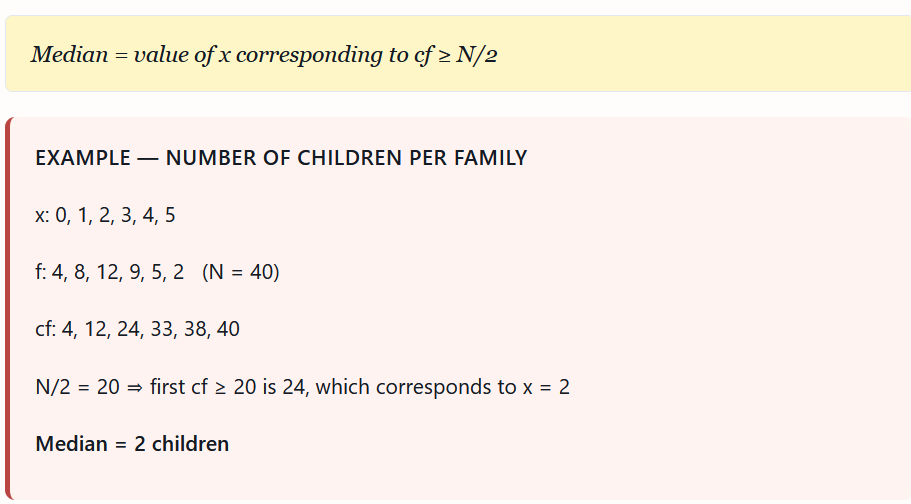
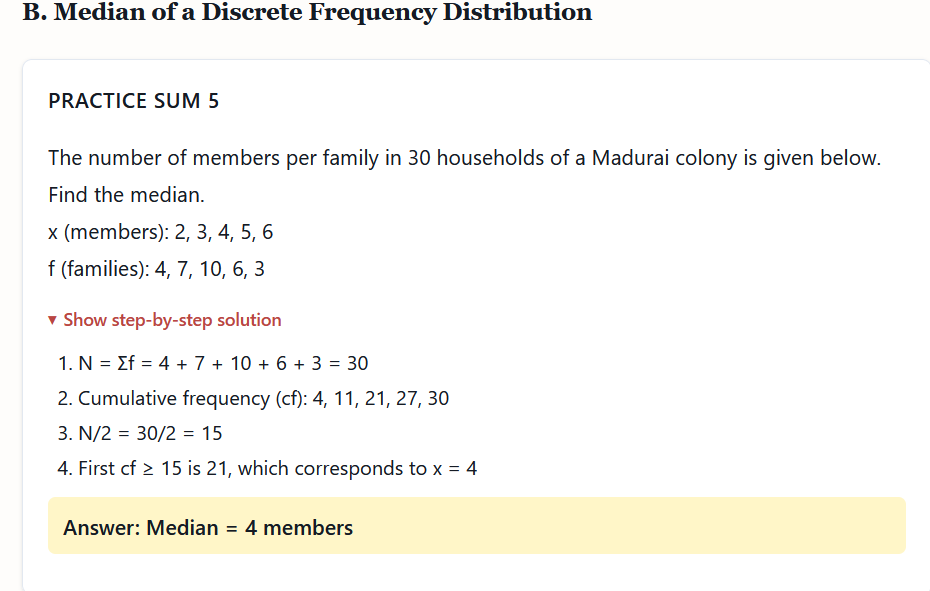
When data is given as values (x) with their frequencies (f), follow these steps:
- Arrange x in ascending order.
- Find the cumulative frequency (cf).
- Find N = Σf, then compute N/2.
- The value of x for which cf is just greater than or equal to N/2 is the median.
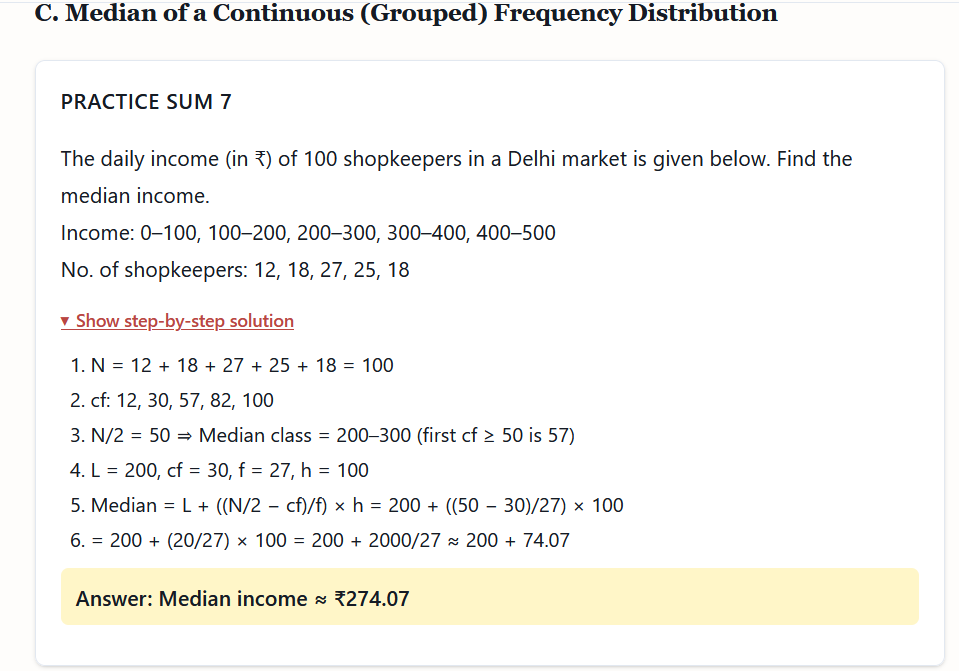
3) Median of a Continuous (Grouped) Frequency Distribution
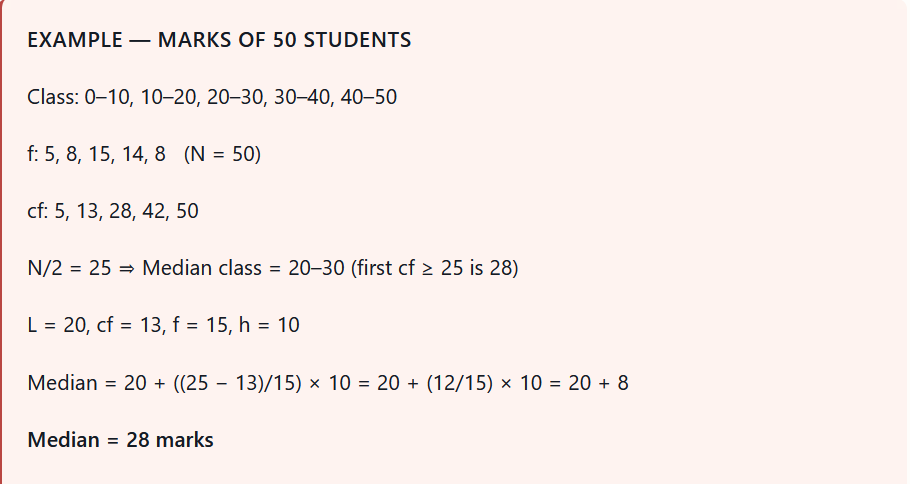
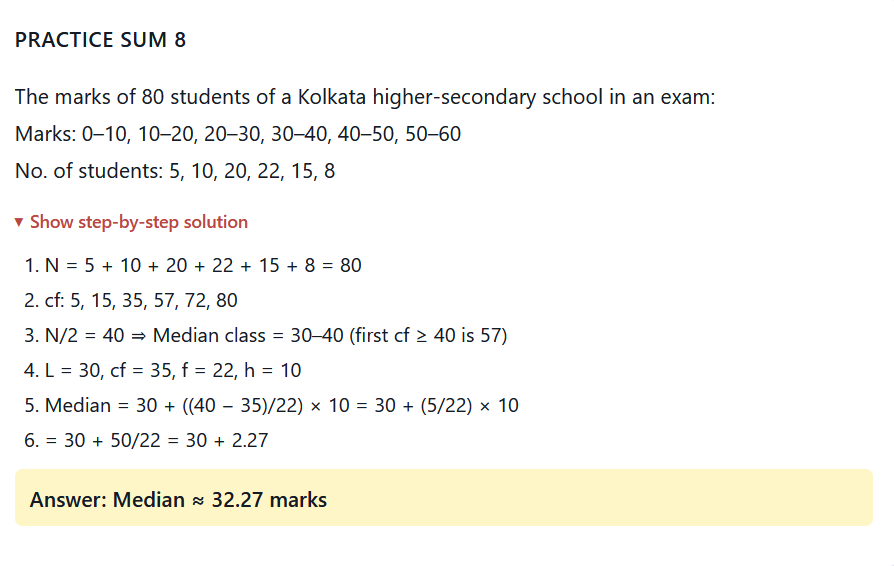
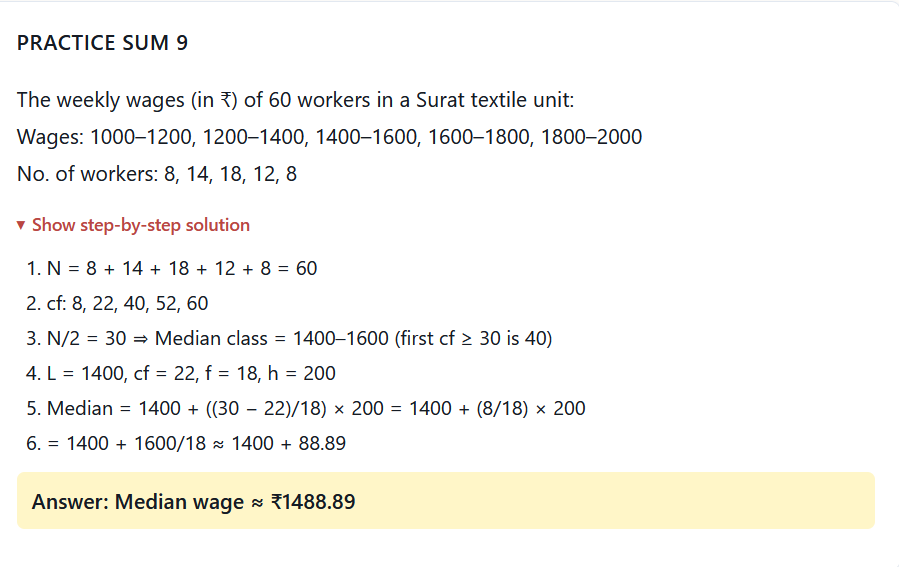
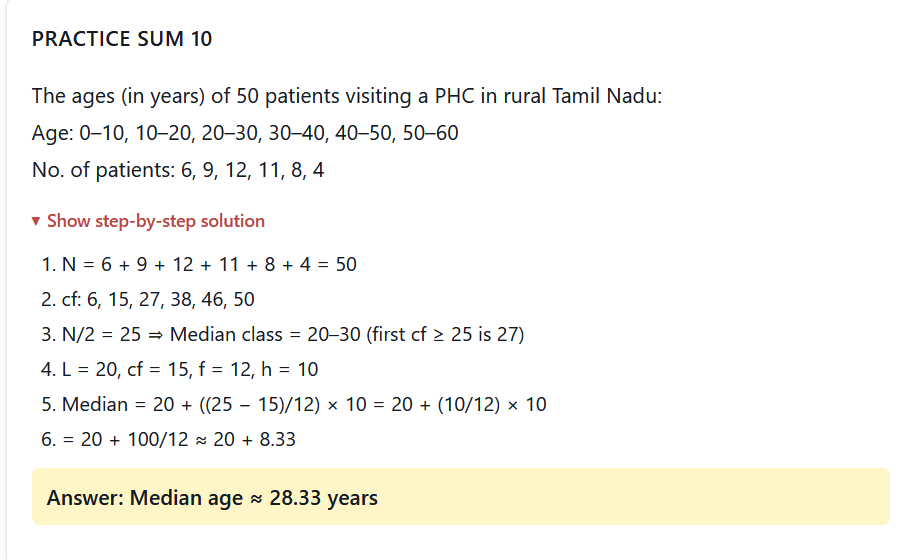
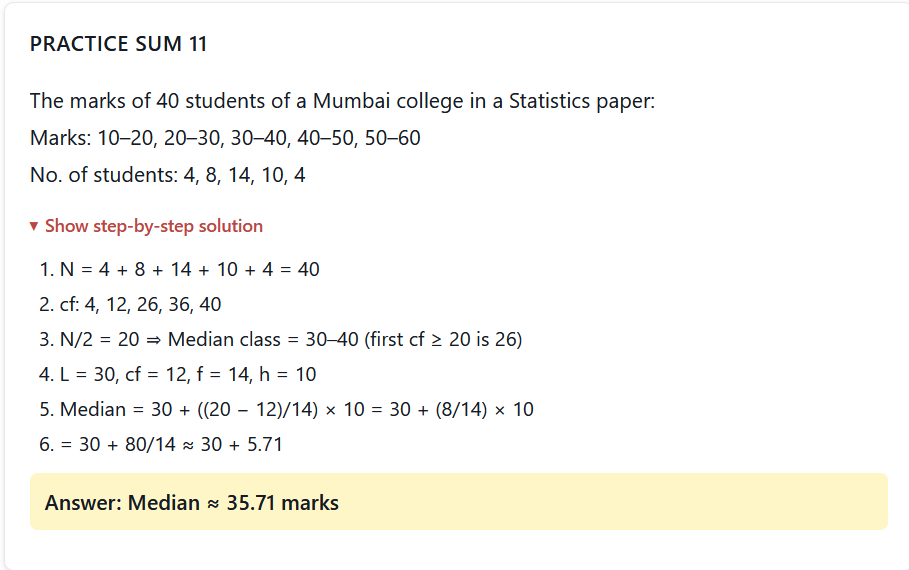
For class intervals, first locate the median class — the class whose cumulative frequency first reaches or crosses N/2. Then apply:

Where:
- L = lower limit of the median class
- N = Σf (total frequency)
- cf = cumulative frequency of the class before the median class
- f = frequency of the median class
- h = class width (size of the class interval)
Properties & When to Use Median
- It is a positional average — depends on order, not actual values.
- Not affected by extreme values — best for income, wages, land holdings, prices.
- Can be calculated for open-end class intervals too.
- Can be located graphically using ogives.
- Sum of absolute deviations Σ|x − Median| is the least.
Practice Sums – Score Full Marks
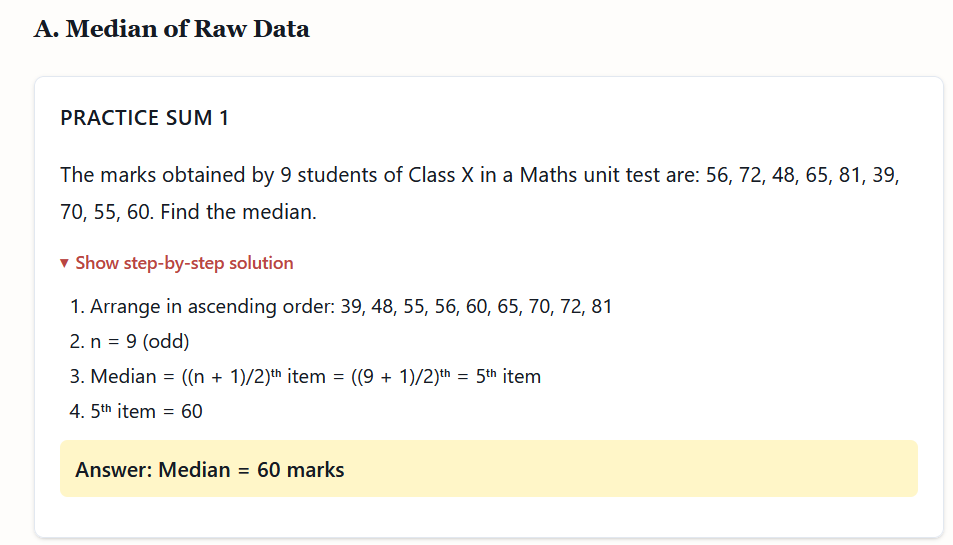
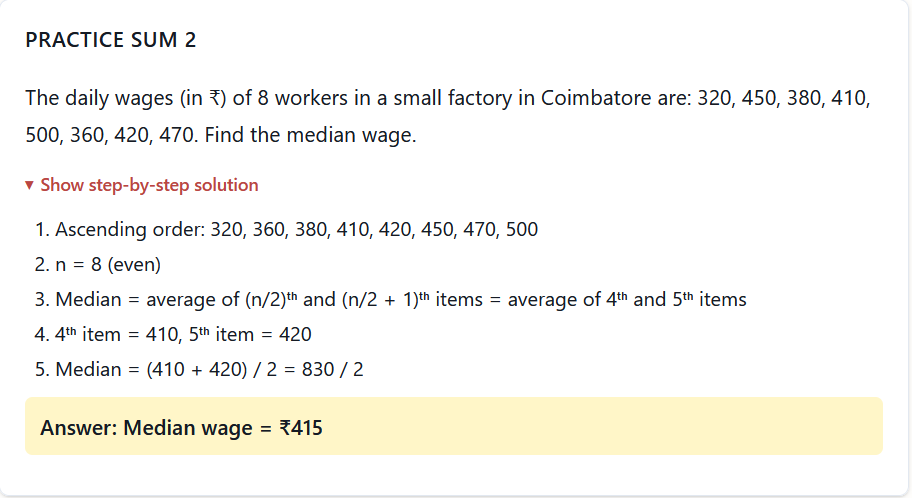
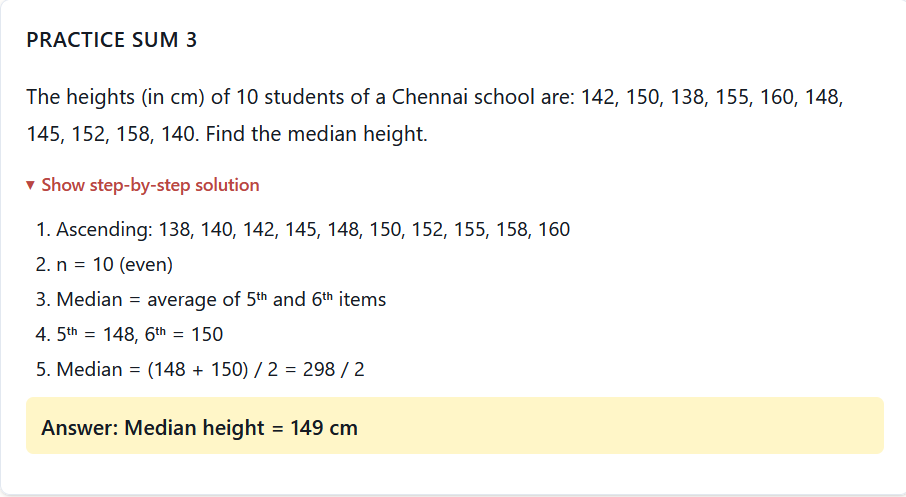
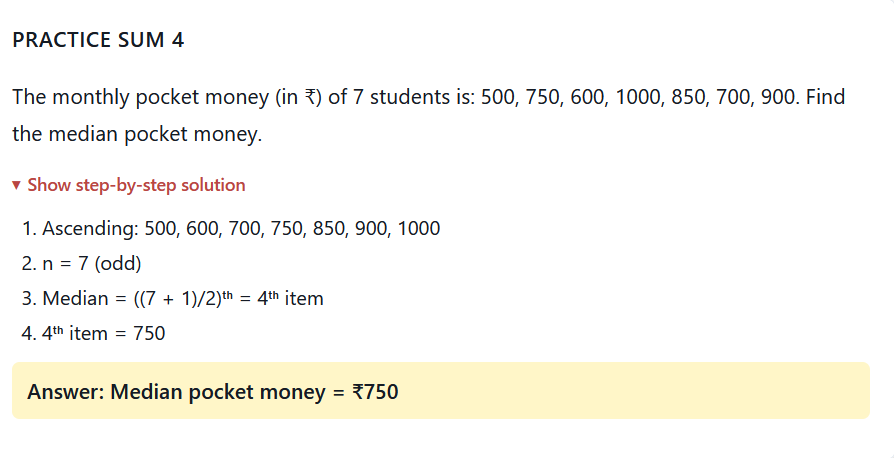
Try each problem on paper first, then click Show step-by-step solution. Every step is written the way an Indian board / university examiner expects formula, substitution, simplification, and final answer with units (₹, kg, marks).
Tips to Score Full Marks
- Always arrange data in ascending order for raw data — many students lose marks by skipping this step.
- Write the formula first, then substitute. Examiners give step marks even if the final answer is wrong.
- For grouped data, clearly state the median class with reason (“first cf ≥ N/2”).
- Use the correct cf of the previous class in the formula — not the cf of the median class itself.
- Always include units (₹, marks, kg, cm, years) in the final answer.
- Round only at the final step, usually to 2 decimal places.

Swathika B is an MBA graduate in Finance & Business Analytics , the founder of The Commerce Lab. With a strong academic foundation in B.Com BFSI and hands-on experience in financial analysis, data analytics, and business studies, she created this platform to make Commerce and Accountancy simple, practical, and exam-ready for students across India.