Method 1 : Average Profit Method
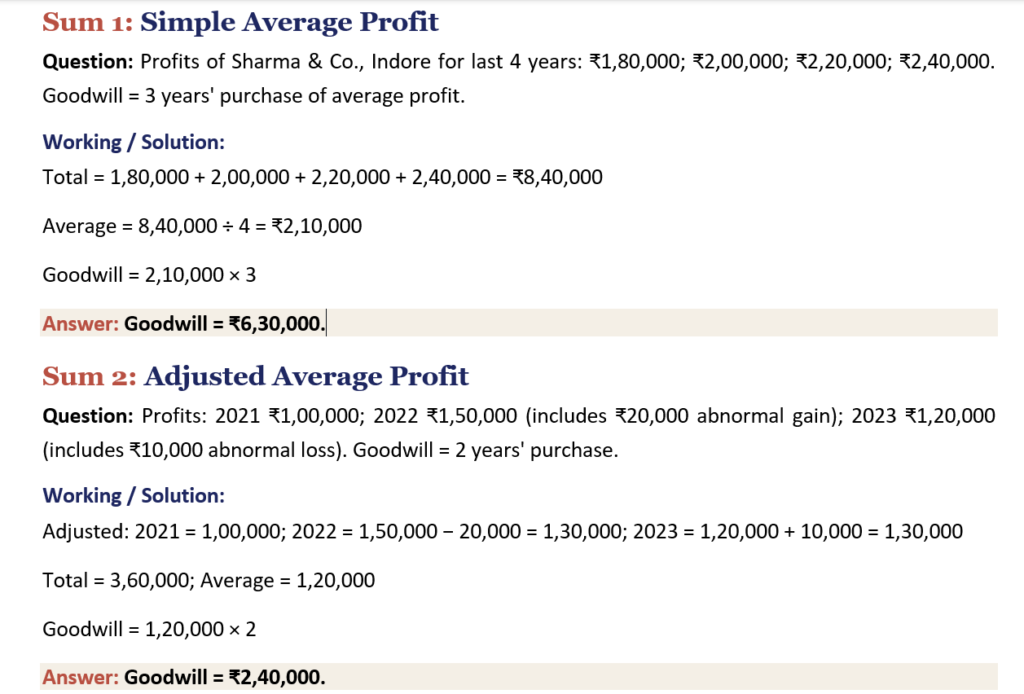
Goodwill is calculated as a multiple of the average maintainable profit of past years. Best suited when profits are fairly stable, e.g., a chartered accountant’s firm in Bengaluru.
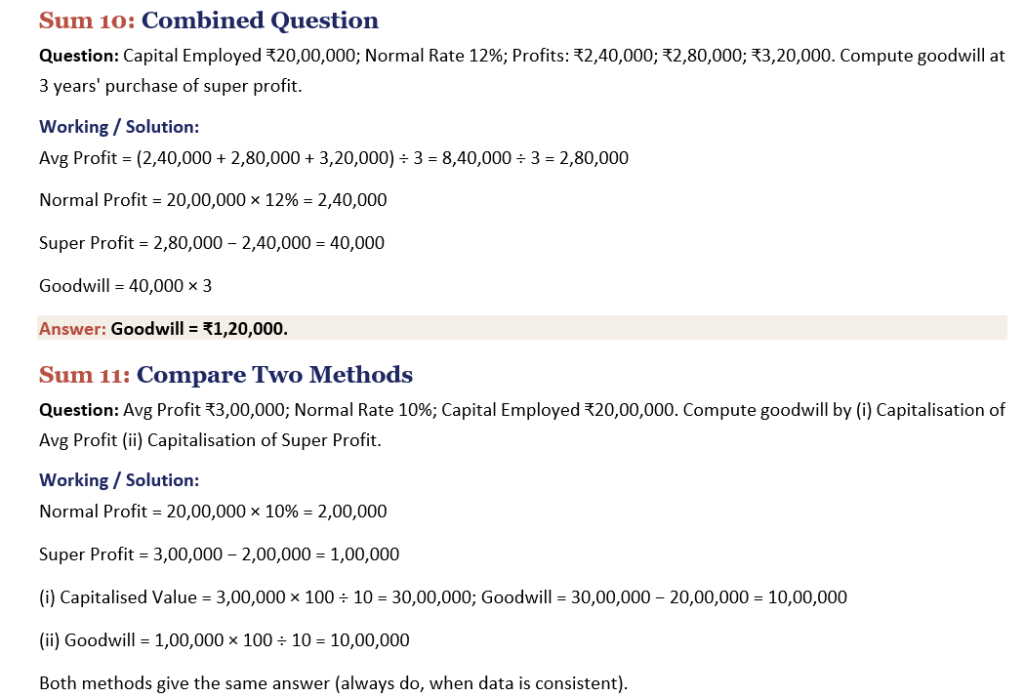
Goodwill = Average Profit × No. of Years’ Purchase
Steps
- Take last 3–5 years’ profits.
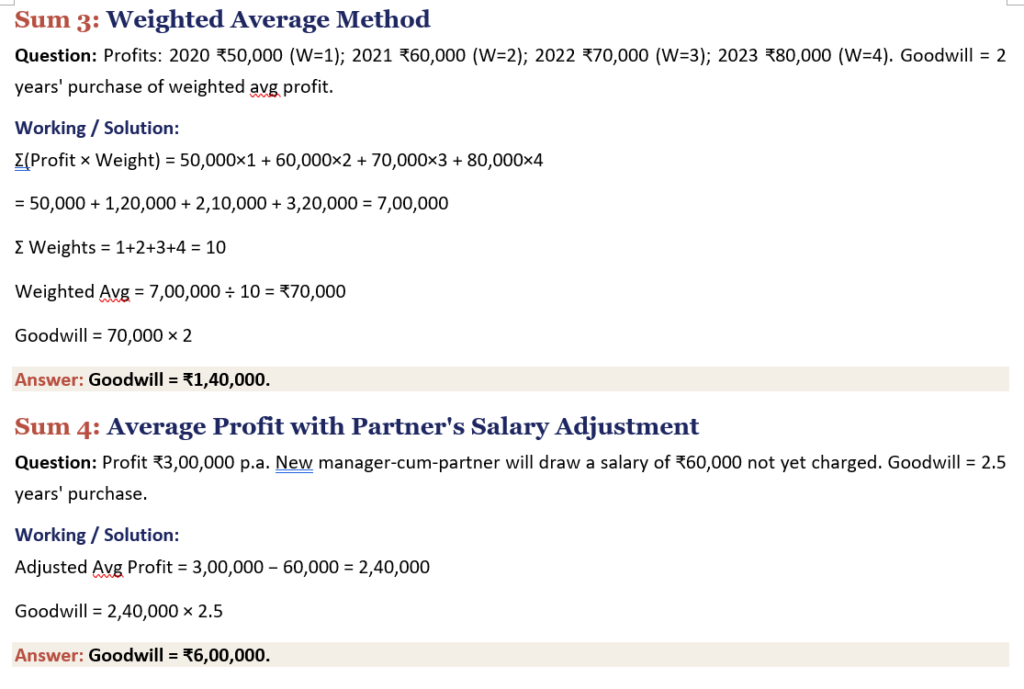
- Adjust for abnormal items (abnormal loss added back; abnormal gains deducted; partner’s salary deducted, etc.).
- Find the simple or weighted average.
- Multiply by the agreed number of years’ purchase.
Weighted Average Method
When recent profits are more important (e.g., growing IT firm), assign higher weights to recent years.
Weighted Avg Profit = Σ(Profit × Weight) ÷ Σ(Weights)
Method 2 : Super Profit Method
Goodwill is paid for the extra-ordinary earning capacity. If a firm only earns the normal industry profit, no buyer will pay anything beyond net assets. Hence we focus on Super Profit.
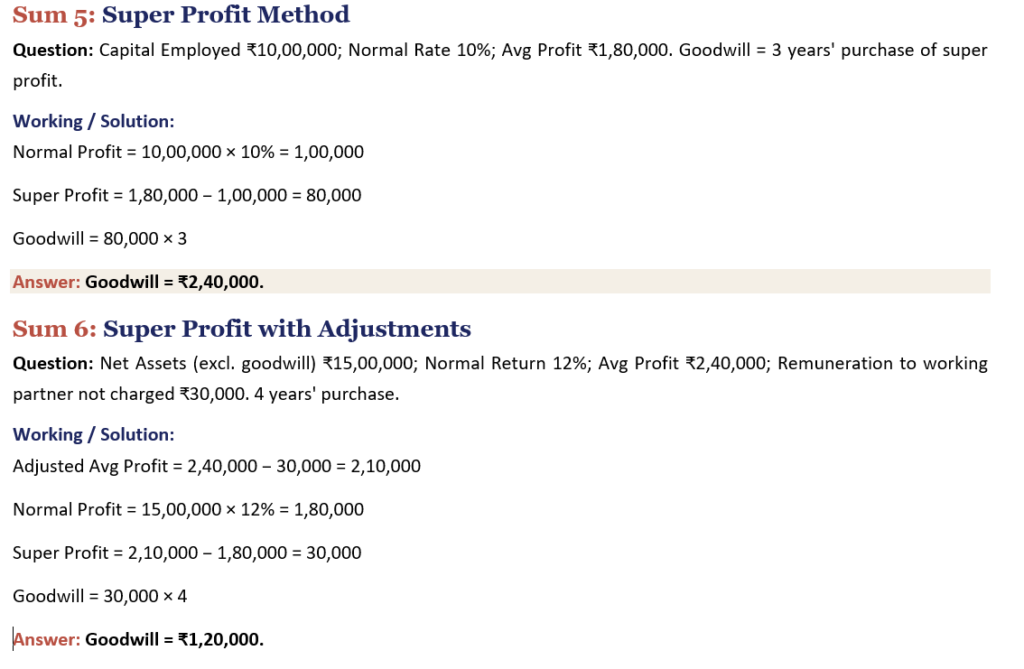
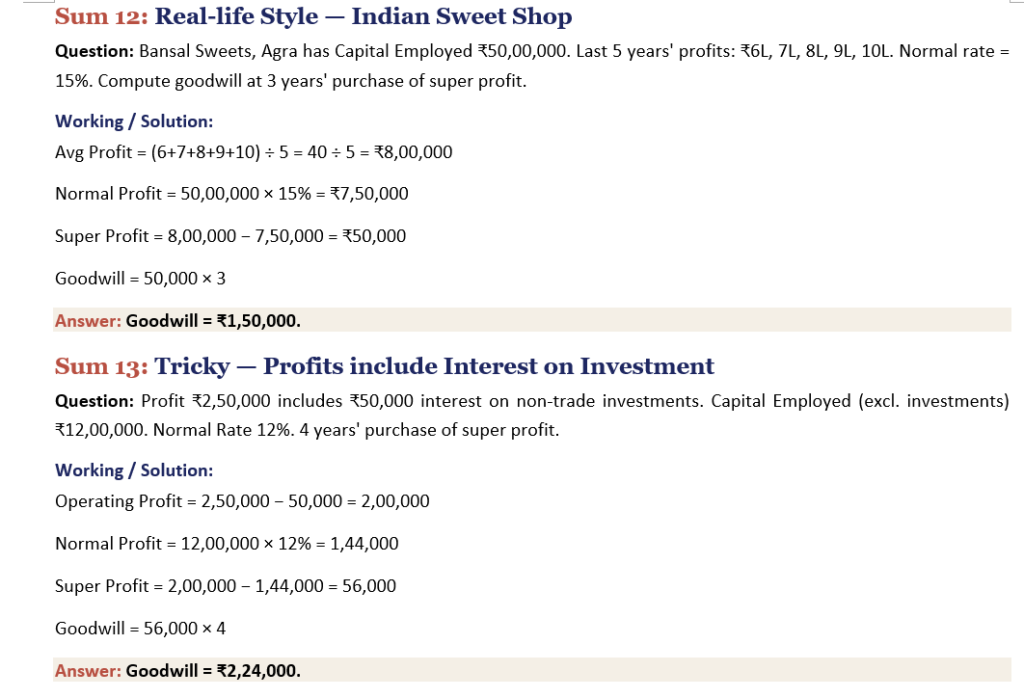
Super Profit = Avg Profit − Normal Profit
Goodwill = Super Profit × No. of Years’ Purchase
Where: Normal Profit = Capital Employed × Normal Rate of Return ÷ 100
Method 3 : Capitalisation Methods
(a) Capitalisation of Average Profit
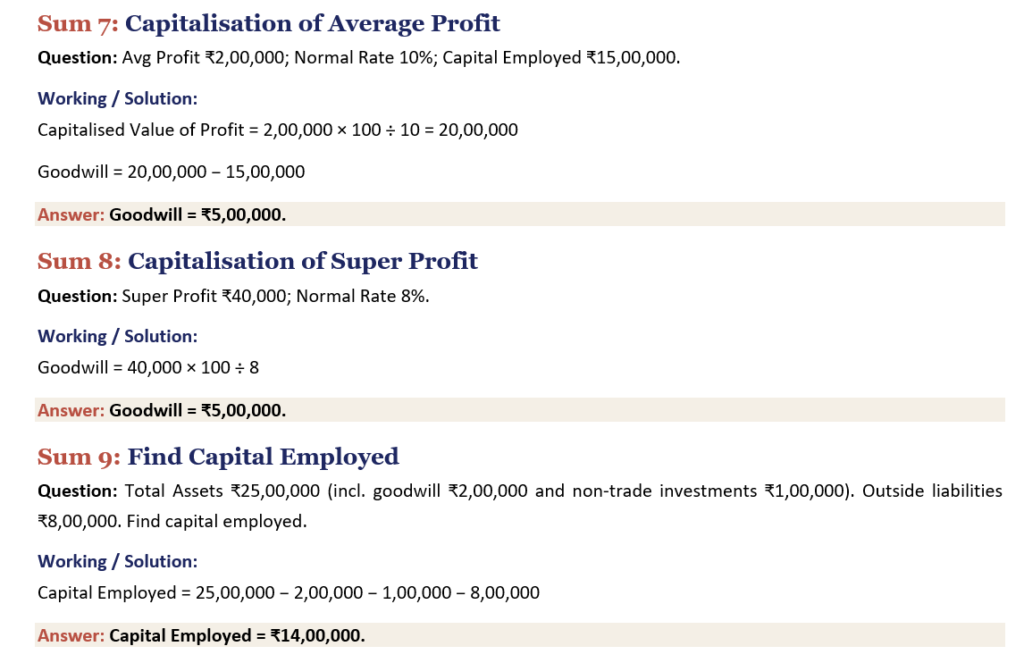
Capitalised Value = Avg Profit × 100 ÷ Normal Rate
Goodwill = Capitalised Value − Net Assets (Capital Employed)
(b) Capitalisation of Super Profit
Goodwill = Super Profit × 100 ÷ Normal Rate
Capital Employed — How to Compute
- Capital Employed = All Assets (excluding goodwill, fictitious assets, non-trade investments) − Outside Liabilities.
- Or: Capital Employed = Capital + Reserves + P&L (Cr.) − Fictitious Assets.
Quick Comparison
| Basis | Average Profit | Super Profit | Capitalisation |
| Focus | Whole profit | Excess profit | Total earning capacity |
| Easy? | Easiest | Moderate | Toughest |
| Use | Stable firms | Growing firms | Negotiation / sale |
Practice Sums (with Full Solutions)
Examiner’s Tips
- Always adjust profits BEFORE averaging.
- Exclude goodwill, fictitious assets and non-trade investments from capital employed.
- Read carefully: “years’ purchase” means multiplication, not interest.

Swathika B is an MBA graduate in Finance & Business Analytics , the founder of The Commerce Lab. With a strong academic foundation in B.Com BFSI and hands-on experience in financial analysis, data analytics, and business studies, she created this platform to make Commerce and Accountancy simple, practical, and exam-ready for students across India.