Shares are often issued in installments by companies. Sometimes shareholders fail to pay allotment or call money. In such cases, the company may cancel the shares legally through forfeiture of shares.
1.Meaning in the simplest words
When an Indian company like Reliance Industries Ltd. or Infosys Ltd. issues shares, the price is usually collected in installments — Application, Allotment, First Call and Final Call. If a shareholder fails to pay any installment within the time given, the Board of Directors can cancel his shares.
Definition
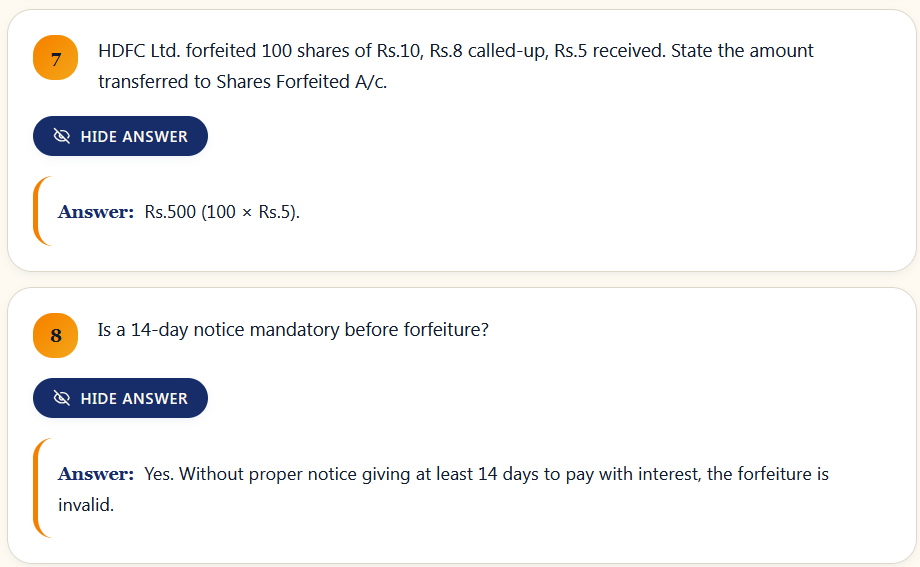
Forfeiture of Shares = Cancellation of shares because the holder did not pay the money due on those shares. The amount already paid is retained by the company — no refund.
2.Why does forfeiture happen? (Reasons)
- Non-payment of Allotment Money — e.g. Mr. Sharma applied for 100 shares of TCS Ltd. but skipped allotment.
- Non-payment of Call Money (First / Second / Final).
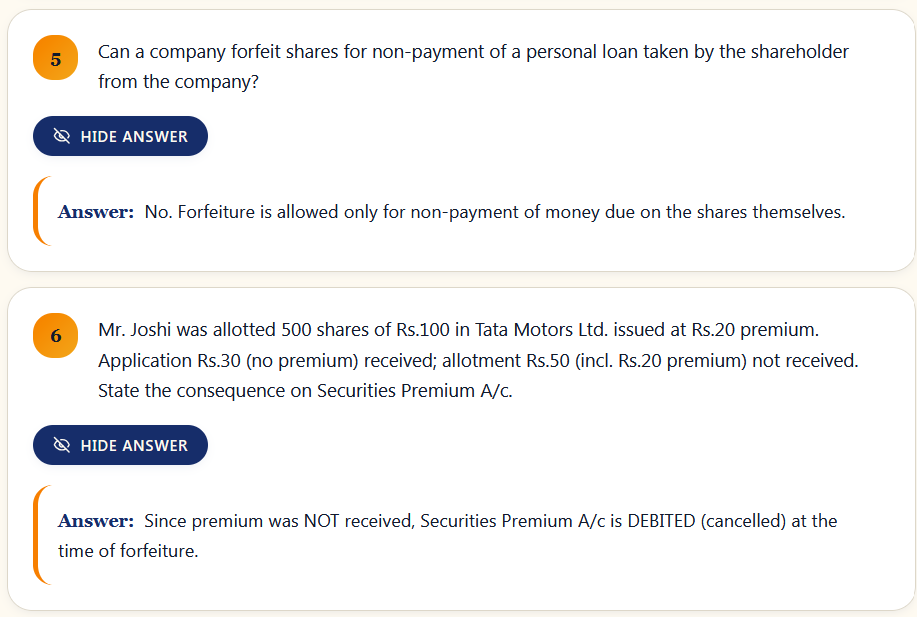
- Non-payment of Premium — common in IPOs of Zomato, Nykaa, Paytm.
- Violation of conditions of issue stated in the Articles of Association.
3.Legal conditions before forfeiture
Indian companies must follow the Companies Act, 2013 and Table F of Schedule I:
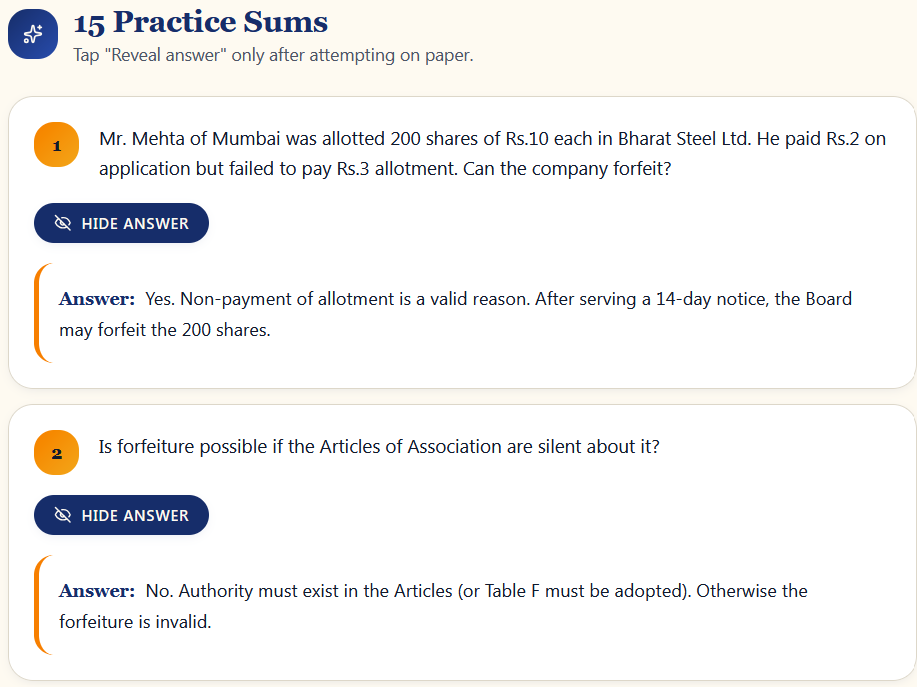
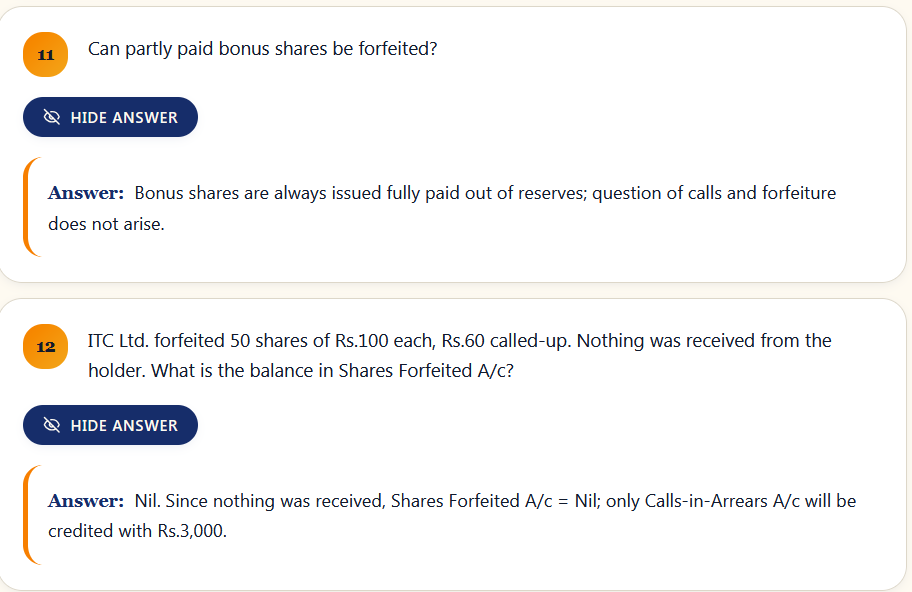
- Authority in Articles — Articles must permit forfeiture (Reg. 28–34, Table F).
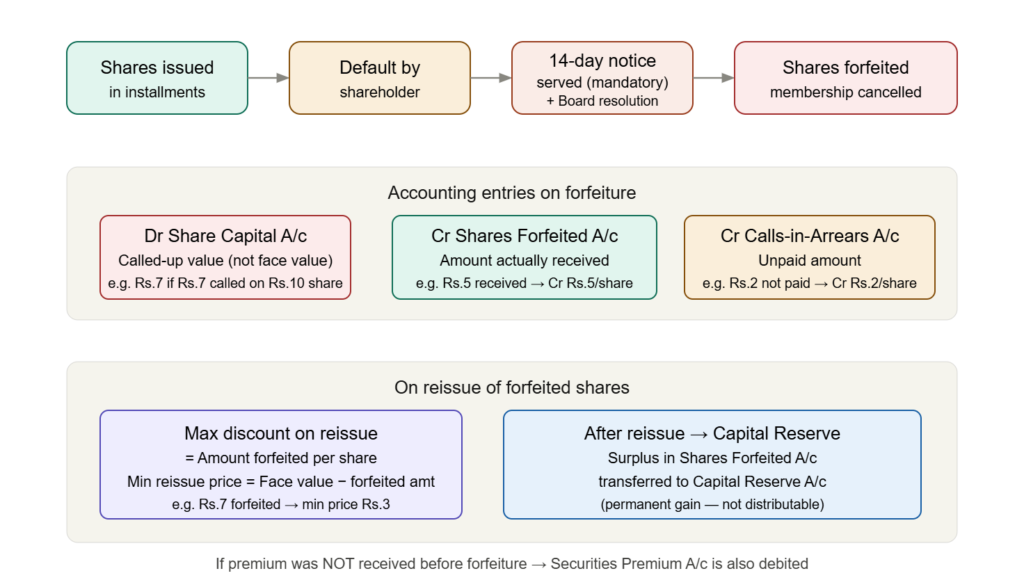
- 14-day notice — Defaulter is given written notice to pay the unpaid amount with interest.
- Board Resolution — Formal Board resolution to forfeit if he still doesn’t pay.
- Bona-fide purpose — Forfeiture cannot be used as a malafide tool.
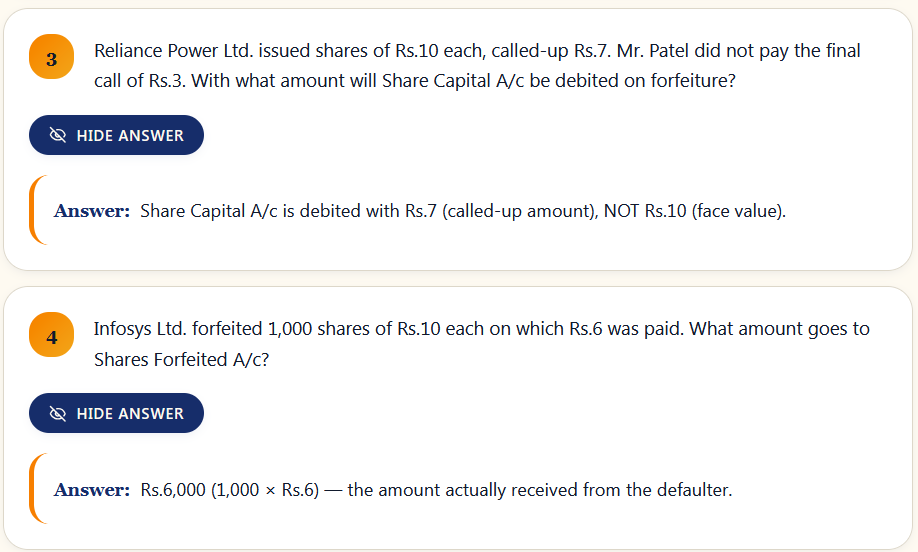
- Proper accounting — Share Capital A/c is debited with the called-up value, NOT face value.
4.Effects on the shareholder & the company
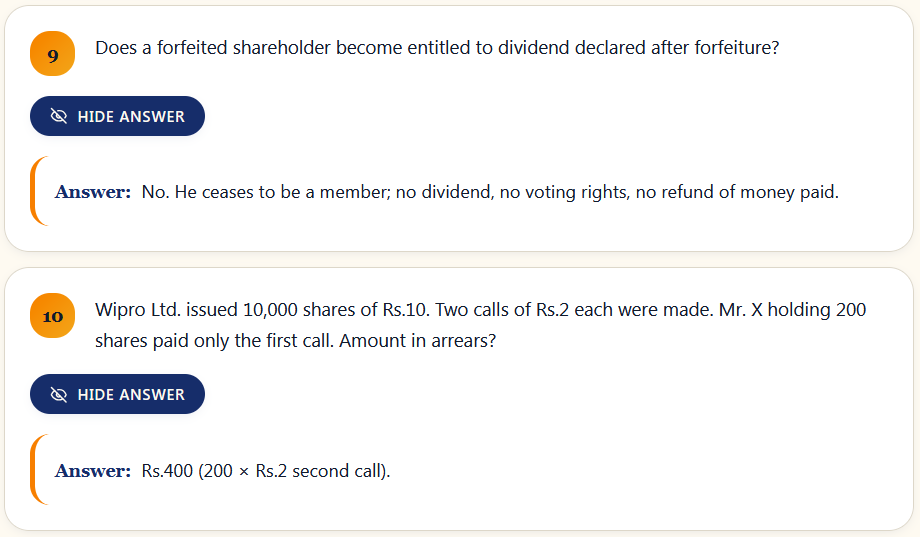
- The shareholder ceases to be a member of the company.
- His name is removed from the Register of Members.
- Money already paid moves to a special account — Shares Forfeited A/c (capital nature).
- The company can later reissue these shares (covered in Article 3).
5.Quick exam pointers
- Forfeited Shares balance shows under Share Capital in Schedule III balance sheet, until reissued.
- Forfeiture is most common when shares are issued in instalments or as rights shares.
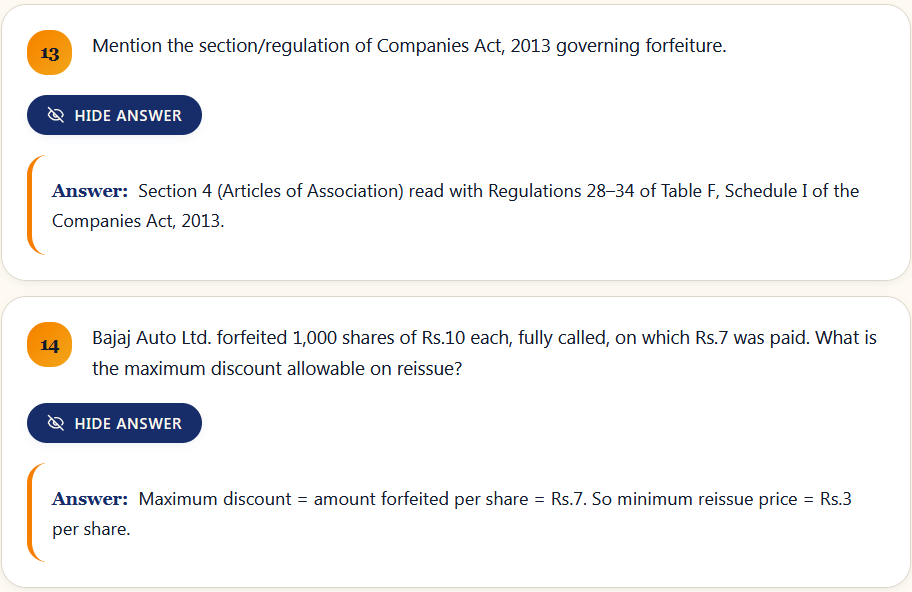
- Maximum discount that can be allowed on reissue = amount forfeited per share (we’ll prove this in Article 3).
Bottom line
Forfeiture is the company’s right — not its duty. It can also choose to sue the defaulter instead. But once forfeited, the holder loses everything he paid.

Swathika B is an MBA graduate in Finance & Business Analytics , the founder of The Commerce Lab. With a strong academic foundation in B.Com BFSI and hands-on experience in financial analysis, data analytics, and business studies, she created this platform to make Commerce and Accountancy simple, practical, and exam-ready for students across India.